Sunday, March 25, 2012

On Yogurt Making

It seems as though almost everyone I know is making yogurt in their crock pot nowadays.  Easy and oh-so-yummy-goodness, plus less expensive than store bought. At the risk of arriving a little late to the party, here is the basic plan.


1. Pour 8 cups of milk into the crock pot. (Not ultra-pasteurized. We buy ours from a local dairy farm. YUM.) 
2. Cook on low for 2 1/2 hours.
3. Let sit for 3 hours.
4. Stir in 1/2 C plain yogurt (starter), wrap in a heavy towel or blanket and let sit for 8 hours.


I start my yogurt at 4:30, set the crock pot timer for 2 1/2 hours AND the kitchen timer for 5 1/2 hours (explanation follows).  When the kitchen timer goes off at 10:00, I stir in the starter and go to bed.


Whey and yogurt
5. After 8 hours is up, leave as is or, for creamier yogurt, place a colander in a bowl and line with cheese cloth. Pour yogurt into colander and let it strain for the day or so.


I personally like to let it strain for about a half a day to a day until it's the consistency I want. (Read it depends on when I remember I have yogurt draining in my fridge.) Then I take a large spoon and scoop 1/2 C into a small container to use as a starter in the next batch and then transfer most of the rest of it into a container with a lid.  In the bowl under the colander, you are left with whey which is worth keeping. (Find uses here.)  The remaining thicker yogurt still in the cheese cloth I allow to continue to strain to make yogurt cheese.  It is like cream cheese, but more tart.  You can experiment with adding salt or herbs to it.  Yum.


Note: Some people say that you should always start with a fresh (store bought) yogurt        starter. I have been saving my own yogurt as a starter for months now with no problems.


This is so stinkin' easy it's ridiculous.  The hardest part is remembering to stir in the starter and strain it in the morning (hence the setting of the kitchen timer.)  Last time I made yogurt, I forgot to do both.  When I went to pour it out the next evening, it actually looked like yogurt, not really sure what it was.  Ben jokingly suggested using one of the kids as a guinea pig to test it. Tempting, but seeing as how that could possibly end with me caring for aforementioned sick guinea pig, I decided against it.

Tuesday, March 13, 2012

Much Ado About Chicken (and Kale Soup)

In a surprising twist of self-fulfilling prophecy (sarcasm), I have failed to consistently update my grocery budget spreadsheets since the second week of January.  My promise to blog about our grocery budget with money saving tips has also failed seeing as how my last post was January 22nd, and we are now in the middle of March.  Oops.

However, I can tell you that our grocery spending has gone down significantly since the first of the year and why. And I can tell you how we get our money's worth out of our chicken. :) 

Waste not, want not
Gone are the days when a whole chicken could feed my family for three meals via the "rubber chicken" method.  (Dinner 1: Whole Roasted Chicken, Dinner 2: Chicken Burritos, Dinner 3: Homemade broth to make soup)  I roasted a chicken for dinner the other night and all that is left is enough to make soup.  Two meals is still better than one, but this hasn't been the most efficient plan for our family.

This is the method that works best for us now, and allows my husband to play with sharp objects.  (See photo right.) We buy two whole chickens (or more if we want to stock up) from a meat market that sells free range chicken.  Ben cuts the meat into parts which yield 4 breasts, 4 legs, 4 thighs, and 4 wings--for us, that's two-three meals, plus the wings go to a bag to use as meat in soups or for chicken wings when we have enough accumulated.  The carcasses (fun word) go into a stock pot with water, vegetables, herbs, and 1 Tablespoon of vinegar to make around 15 1/2 C of chicken broth which we can and store in the pantry.  After the broth is made, we pull the extra meat off of the carcasses (there's that word again) which leaves us with 3 1/2 C of cooked chicken which we use to make soup, chicken salad, or burritos--another two meals.  All together, that's 4-5 meals, plus a little extra meat (wings), and 6-7 jars of oh so yummy homemade broth. 

Use what you have on hand
Inspired by a couple of other blogs I've been reading (and a lack of motivation to grocery shop), I started substituting and tweaking recipes and menu plans to fit what we had in our freezers and our pantries.  I've always done this to fit what vegetables we get in the coop, but never to this depth.  Here is what amazed me: we didn't go to the grocery store for three weeks in a row and still had plenty of food to eat.  We did still have our every-other-week fruit and veggie coop and dairy/meat run.  The result of shopping at the grocery store less? (drum roll, please) Our grocery bill went down an average of $140 a month from last year.  No joke.

Below is an example of how to tweak a recipe to fit what you have on hand.  The other night I wanted to make a chicken and kale soup.  I couldn't find one on the Internet that fit what I wanted, and I had a recipe for White Bean and Kale Soup which gave the option of including sausage. By the way, I actually liked this version better than the original, and the family devoured it.

White Bean and Kale Tomato Soup (from Not Your Mother's Slow Cooker Cookbook)
Transformed to Chicken and Kale Soup

Three 14-ounce cans vegetable broth (changed to two jars of homemade chicken broth and 14 oz water)
One 15-ounce can tomato puree (two fresh tomatoes blanched and pureed)
One 15-ounce can cannellini beans, rinsed and drained
1/2 C converted rice (changed to 1/2 C orzo added the last 10 minutes)
1 medium-size yellow onion, chopped
2 cloves garlic, minced
2 t dried basil
Salt and pepper to taste
1 pound kale, stems removed and leaves coarsely chopped
1 pound sweet Italian sausage (changed to two cups cooked chicken)

1. Combine the broth, tomato puree, beans, rice (omit), onion, garlic, and basil in the slow cooker, season with salt and pepper, and stir to blend. Cover and cook on LOW for 5 to 7 hours. (I cooked mine on the stove for around 30 minutes.)

2. Stir in the kale and sausage (chicken), if using, cover, and continue to cook on LOW until the kale is limp and tender, another 20 to 30 minutes. When you add the kale, it will fill the cooker at first, you can add it in batches if you need to. (On stove around 15 minutes or so. Add the orzo with 10 minutes left.)

3. Ladle the coup into bowls and serve hot with Parmesan cheese and a drizzle of olive oil. (I omitted the olive oil.)

Sunday, January 22, 2012

The Kid Factor

At the beginning of this month my husband and I took the kids to Sweet Tomato.  While we were eating our salads, another family sat down a few tables away from us.  I glanced over and noticed the little boy who looked to be about four had cracker-type food and raisins on his plate. Then they brought the girl a plate stacked full of bread sticks.  I'm not going to lie to you; I totally judged.  And I really have no room to do so as this morning I consumed a large piece of cake brought to me by one of my students, and just now I finished a slice of apple pie which was purchased from Kroger and contains who knows what. I didn't read the label.  

Judgement aside, I think too easily we as parents (myself included) can fall into the I'm-afraid-my-kid-will-starve-if-he-doesn't-eat-something-so-let's-just-give-him-whatever-he-will-swallow trap.  The truth is that not all foods are created equal and eating "something" is not better than missing a meal because the child doesn't want the healthy options.  I promise you, your child will not die if they occasionally miss a meal, and their bodies are programmed not to let them starve.  


Let me say this as gently as possible: children eat what we give them and teach them to eat.  Children in every country of the world eat the food that is typical of their culture.  I know as a parent it can be difficult and emotional to deal with children's eating habits.  I've outlined some ideas that have worked with my children and maybe can help you in your journey with your children to healthier eating habits.  (As always, if your child has a medical condition, follow the advice of your pediatrician before making changes to their diet.)


Get them involved
Kids love to imitate adults, and are more likely to eat foods that they have helped to make.  Give your little "chef" jobs like tearing up the lettuce for the salad and measuring ingredients.  As they get older, teach them cooking skills so they can take responsibility for themselves and won't be helpless when they leave home.  If you have a garden, get them involved in planting seeds and watering plants.  Eating snap peas straight of the vine is a special treat.


Relinquish control
Yes, you read that right.  This is one of the most successful strategies I have used with my kids.  As an adult I don't want someone just plopping food on my plate and saying, "Eat this."  Children want choices, too.  One of the favorite meals in our house is "make your own salad night."  Everyone starts with lettuce, and the kids get to pick what they want to add.  Here are some other examples of how this works:


For snack: "Would you like an apple or grapes?"
When serving food: "Do you want a little salad or a lot of salad?" "Do you want your chicken on your rice or on the side?"


Be an example
If it's not a food you want your kids to eat, don't keep it in the house.  If it's a "sometimes" food, only eat it sometimes.  Rest assured that if you aren't eating to the same standards that you want your kids to have, they will call the "that's not fair" card. (And they will likely want to scarf down those forbidden foods as adults in righteous vindication.)


Dealing with picky eaters
Allow your kids to have dislikes in foods.  One of ours doesn't like yogurt and another doesn't like beans.  We don't make them a separate dish, but there are other foods served with the meal that they can eat.  However, in our house the rule is you can have seconds when you've had firsts of everything.  If we know it's a food they're not particularly fond of those "firsts" are a small portion.  This is normally met with complaints at first, but now our kids know the way it works.  And over time, we have seen them grow to like foods that they objected to at first.


Making changes is difficult at first.  Changes also take time.  What we've seen as a result, though, is that our kids love real food. They ask if our food is homemade or if it came from our garden.  They want to know if the meat and dairy came from the farm.  And they get excited about it. We've also noticed that eating real food improves their health and their mood.


One important note is that we don't force our kids to eat or eat a particular food.  As parents we can no more force our children to eat something than we can grow wings and fly.  What we can control is what food is available for them to choose from. 


What has worked for you with your kids?

Sunday, January 1, 2012

New Year's Resolutions?

I always cringe at the whole "New Year's Resolution" kick.  In the back of my mind, skeptical little me says something like, "Yeah, right. Sure. That's gonna happen."  And to be honest, most New Year's Resolutions fail. Miserably.  Maybe because we promise ourselves too much change too abruptly.  Or maybe because we throw in the towel after one little setback thinking that all is lost, and our lives turn into a little Greek tragedy in our minds.  Surely I'm not the only one prone to overreact.


Like two weeks ago when I not only broke the Pyrex baking dish therefore ruining dinner, but then also left the burner on all night long under dinner number two destroying any chance of leftovers.  The fact that I also sabotaged the last two batches of yogurt (over the period of a month) pops up in the back of my mind and the end result is me crying in the kitchen wondering if I've completely lost my mind and thinking there is no hope for me to be able to successfully cook healthfully for my family, the world has come to an end.  Dramatic and over-the-top, I know.


In spite of my resistance to New Year's Resolutions, I find myself making them.  Normally to myself or my husband, not out loud to other people, lest they should point their fingers at me and mock me when I fail.  Truthfully, I make resolutions more often than once a year.  There are summer resolutions, beginning of school year resolutions, Thanksgiving, Christmas, and Easter resolutions, and more in between just because.  It is quite possible that I self reflect to much.  However, minus the self-condemnation and perfectionism, self reflection allows us to move forward into positive change.


So...I'm going out on a limb here and letting you in on a couple of my goals for this year.


1. Food Budget  I know I always say that eating healthfully isn't expensive, but I haven't been tracking actual grocery costs in a while.  It's time to put some numbers to my claim.  This year I plan to keep a spreadsheet on our grocery costs and blog about them at the end of the month to hold myself accountable.  I will include money saving tips in these blogs as well like how to turn two chickens into many meals and savings. Cha-ching!


2. Meal Planning  I know, it's shocking. You thought I was perfect in this, right?  I've been making menu plans halfway but not really assuring that we have all the ingredients on hand for the menu.  Oops.  We also haven't been looking ahead on the weekend to get ready for the week.  Which results in some chaos around the dinner hour, especially when the kids have activities.  Today we went to the grocery store and picked up the few items we needed for the week and spent a little time prepping.  And I didn't even lose it when my beloved blender bit the dust.


Below is our current menu plan.  Enjoy!

         Side Note: If you're wanting to make diet changes see my previous post here to         help you get started.


Winter Meal Plan


Saturday- Lasagna, Steak, or Meatloaf  (Lasagna and meatloaf are freezable.)
Sunday- Chef's Choice (Tonight is salmon; next week will be wings not fried in vegetable shortening, though.)
Monday- Crock pot Bean Soup or Vegetable Soup (I use my cookbooks or search the web based on what we have on hand.)
Tuesday- Spaghetti or Parmesan Chicken (Cook meat on the weekend to save time.)
Wednesday- Leftovers night
Thursday- Quesadillas or Bean Burritos (We can beans and keep them on hand.)
Friday- Clam Chowder (Disclaimer: We haven't tried this recipe yet, but it looks similar to one I lost. We will probably tweak it a bit, of course.) or Chicken and Dumplings (recipe below)


  • The Best Ever Chicken and Dumplings

    I sliced and diced this recipe from a couple of different recipes and tweaked it a little. Yum.


    Stew

    • 1 potato, peeled and chopped
    • 2 carrots, chopped
    • 1 (14 ounce) can free range chicken broth (or homemade)
    • 1/4 cup flour
    • 1/2 teaspoon salt
    • 1/2 teaspoon dried thyme leaves
    • 1/4 teaspoon pepper
    • 2 lbs bone-in chicken thighs
    • 1 (9 ounce) package frozen baby peas
  • Dumplings

    • 1 1/2 C whole wheat pastry flour
    • 2 t baking powder
    • 1/2 t baking soda
    • 3/4 t salt
    • 3 T butter
    • 1 large egg
    • 2/3 to 3/4 C cold buttermilk, as needed
  • INSTRUCTIONS

    • Stew

      1. In a 3-4 quart crock pot, mix potato and carrots.
      2. In medium bowl, combine chicken broth, flour and spices and blend well until smooth.
      3. Pour over vegetables in crock pot.
      4. Add chicken.
      5. Cover crock pot.
      6. Cook on LOW for 6-8 hours until chicken is thoroughly cooked and no longer pink in center. Remove chicken and pull from bones, if desired.
      7. Add peas and cover again.
    • Dumplings

      1. In a medium bowl , whisk together flour, baking powder, baking soda, and salt. Cut in the margarine with a fork until the mixture is crumbly. Stir in the egg and 2/3 C of the buttermilk and blend until a lumpy, thick, soft dough is formed, adding the remaining buttermilk if it is too dry. do not overmix.
      2. Using an oversized spoon, scoop up some dough and drop immediately on top of the finished simmering stew in the slow cooker, taking care to place each dumpling on top of something. Cover and cook on HIGH until the dumplings are cooked through, 23-30 minutes. Pierce the dumplings with a toothpick; it should come out clean. serve immediately.

Sunday, December 25, 2011

The Day After Christmas

Every Christmas season starts out with good intentions.  This year we will bake cookies.  This year we will finish our shopping early.  This year we will do Advent Readings.


Yet Christmas Eve I found myself buying ingredients for pecan pie and stocking-stuffers amid other last-minute shoppers and football game traffic.  Fast forward to see me and the hubby baking aforementioned pie and stuffing said stockings late that night while the children were nestled all snug in their beds.


And the Christmas cookies?  I really tried.  Promise. But I left the dough out too long and it stuck to the counter.  We managed a few cut outs that looked more like Gingerbread poop than Gingerbread men before deciding to postpone the cookie-making until later.  Later never came.


As far as Advent Readings go, I read two.  Which is one more than last year.  So there's hope, right?


To be honest with you, this year I've wrestled with the idea of how we celebrate Christmas.  Of how we buy gifts and from whom and to whom we give them.  Of whether the way we celebrate is the way Jesus would want us to celebrate Christmas.

Seeing my children's excitement when opening long-awaited gifts shifted my view a bit.  Their childlike anticipation and joy reminded me that Christmas isn't only a time to reflect, but also to celebrate.  Waiting over. Promise fulfilled.  Who better than children to remind us how to party?


I know that Christmas isn't Jesus's "real" birthday. I know about the pagan roots, etc, etc.  But it's the time that we've decided to remember His birth.  And isn't it right that we should do so?  We set aside time for our birthdays and anniversaries, veterans, presidents, and patriotic holidays.  In the Bible the Israelites set aside time to remember and to celebrate important events.  And they celebrated.  And feasted.


I'm not saying that we shouldn't remember Jesus's birth every day and live in a way that lines up with our faith.  I'm not saying that we should give in such excess that we dig ourselves into debt.  I don't think it's all about giving or getting the nicest, newest, latest "toy" that Plastic Inc. produces.  However, giving thoughtfully and lovingly to our family and friends and giving generously to those who have not seems like a fitting way to honor a King who told us to have faith like a child.


This year I'm baking Christmas cookies the day after Christmas.  And mailing a few cards.  After all the waiting and preparing and anticipation of Christmas, one day seems too little for celebration, as if it's an all-or-nothing, now-or-never, let's-move-on-to-next-year event.  The Son of God came to Earth!  I think we'll celebrate all week.


Here are some yummy recipes for those of you who procrastinate or lack time-task judgement like me...


Pecan Pie (no corn syrup or partially hydrogenated oils)
Gingerbread People
Pumpkin Pecan Snickerdoodles
Rum Balls
Chocolate Truffles
Sugar Cookies


Note: If you're interested in making your chocolate recipes with fair-trade chocolate or want to know why you would want to, find more information here.

Sunday, November 27, 2011

The best part of waking up...

is already having a plan for breakfast.  I had a conversation this past week about my breakfast meal plan.  And, yes, it may seem a little uptight to some. I have used some variation of a breakfast plan for years, tweaking it as my family's needs and our nutritional awareness has changed, and it has made life so much easier in the mornings.


What's wrong with Fruity Pebbles?

Our cultural norms for breakfast tend to be bread-based.  Navigating bread, crackers, cereals and the like is a path full of landmines of food substitutes, additives, trans fat, and high fructose corn syrup.  Studies performed on lab rats have shown breakfast cereals to be at best extremely limited in nutritional value compared to whole wheat and at worst (when eaten exclusively) to cause organ failures from insulin shock.  Even the "healthier" options for cereal are not that good for you.  Not to mention they cost a pretty penny.


"But I don't have time to fix breakfast!"


Mornings are not my thing, so let me tell you I am NOT up at the crack of dawn cooking up breakfast.  Plus, we have four children (and ourselves) to get ready and out the door on time for work/school.  I looked at our family's schedule and nutritional needs and created a weekly breakfast plan.  And it works for us.  I don't have to try to think at 6:30 in the morning, and the children like knowing what's coming which makes for smoother mornings. One night my son asked me what was for breakfast in the morning. When I told him I wasn't sure, he said, "Look at your calendar, Mom."


Below is our family's breakfast meal plan. I included links to some of the recipes mentioned.  Feel free to use it as a starting point to plan for your family.  Keep in mind that nutrition isn't one-size-fits-all, so you may need to adjust accordingly.


Mondays- Baked good and fruit-I make some kind of quick bread or muffin on Sunday for breakfast the next day.  I vary it by the season or what we have on hand, such as banana bread or muffins, pumpkin bread, blueberry muffins, or cinnamon rolls if I made bread over the weekend.  Another option is to make a large batch of muffins or bread once a month or so and freeze it for later use.


Tuesdays- Cereal and fruit-I know I just said boxed cereal isn't good for you.  It isn't.  And we don't eat it.  We eat homemade granola, oatmeal, or we make a muesli-type breakfast that we call "make-your-own-cereal."  Granola is one of those things I make on the weekend.  Although, it doesn't take a whole lot of effort so I do sometimes throw it together during the week.  If you're not a fan of oatmeal, try making your own from raw oats or steel cut oats in the crock pot overnight.  I never liked oatmeal as a kid, but love the stuff I make myself with pecans, apples, cinnamon, and honey stirred in.  I had to play with the amount of water and the cooking time for both kinds of oatmeal because I do not like my oatmeal mushy. Yuck!


Wednesdays- Yogurt and fruit- I start my own yogurt in the crock pot on Sunday nights (can you tell I love my crock pot?)  It is soooo easy and soooo yummy.  If you don't want to make your own, pick up a large container of the plain organic yogurt in the store.  We stir in fresh or frozen fruit and honey or make smoothies and serve it with a half slice of toast or leftover bread from Monday.


Thursdays- Toast and fruit- I make my own bread most of the time, which I'll cover in a later post. When buying bread from the store pick one that is 100% whole wheat without partially hydrogenated oils or high fructose corn syrup.  


Friday- Eggs-This is kind of my Friday treat.  The kids aren't here so it's a little easier for me to take care of breakfast, although I could probably cook eggs on a kid-day occasionally.  Eggs actually are healthy and good for you, believe it or not.  Normally I make an omelet or a breakfast burrito to get some veggies in with it.  (Salsa counts, right?)  Breakfast burritos can be pre-made in a large batch and frozen to be reheated later. Supposedly you can mix omelets in Ziploc bags, freeze them, and then cook them in boiling water, but I'm not really comfortable with cooking my food that way. It takes me maybe five minutes to cook up breakfast, so not that big of a deal. It can take some searching to find tortillas without the yucky stuff. Whole Foods is the only place I have found healthy flour tortillas at a decent price.


Saturday & Sunday- Chef's Choice- Homemade biscuits, pancakes, waffles, coffee cake, or whatever we feel like cooking up.


Helpful Tips


-Look ahead at your week on Sunday to see what you might want to pre-make or to see if you need to tweak your plan for some reason.


-After dinner look at your plan to see if you need to get anything started that night for breakfast the next morning. Have a backup plan if you forget. In our house that's usually toast.


-Set a time for waking up, breakfast, and leaving the house. For example: the kids wake up at 6:30, breakfast is at 6:45, we clean up and leave at 7:00.  If they miss breakfast once or twice, I promise they won't starve, but they will start learning to manage their time.

Monday, November 21, 2011

Don't Throw that Out: A Thanksgiving Tale

Last Saturday night we had a Thanksgiving-ish meal since my parents were in town and the kids were with us.  Since all of us would be eating another Thanksgiving meal, and because we like to get creative in the food department, we decided to put a little twist on the traditional meal.


The Menu


Pumpkin Soup 
(I did NOT actually serve it in it's own shell. I cooked the pumpkin first and then made the soup.)
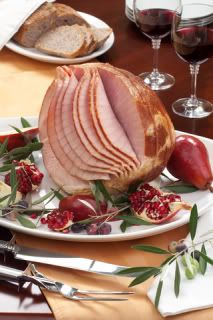
Glazed Ham with Pecan Crust
Scalloped Potatoes
Zwieback Rolls
Cranberry Apple Crisp

The pumpkin soup was not such a hit with the kids, but Ben and I liked it.  Everything else was a definite hit. And I have finally fulfilled my responsibility to the family heritage by making Zwiebacks.


The Leftovers


Of course Thanksgiving always brings to mind leftovers and endless days of eating leftover turkey sandwiches.  Which is an option.  We don't often buy lunch meat because the better options are EXPENSIVE, so some of the ham will be used for sandwiches as a treat.  (Side note: I remember turning up my nose at sandwiches made with leftover turkey as a kid because I was accustomed to slimy packaged lunch meat!) However, my favorite way to use up leftovers is to turn them into a "new" meal.  For example, the leftover scalloped potatoes and some of the ham became part of this morning's Farmer's Breakfast casserole.  


We don't often eat ham, so I am in the process of finding some decently healthy recipes for the leftovers to be spaced out over the next couple of months.  I searched for freezer meals, but a lot of the recipes I found don't really fit into our eating habits.  Also, my preference is to cut up the meat and freeze it in about two-cup portions to be added to recipes rather than pre-make the entire meal.


These are my initial findings in the recipe department:


Lentils with Ham and Rosemary
Southwestern Bean Pot
Split Pea Soup
Ham and Scalloped Potatoes
Cut up ham to add to homemade pizza, breakfast burritos, etc.


(Not a very long list, I'd love to hear any recipe ideas!)


The leftover pumpkin soup I froze in two-cup portions.  I often freeze the leftovers from soup or beans in smaller portions to be used in the future as quick-and-easy lunches or dinner.  Cheaper and healthier than Lean Cuisine, just add a salad, raw veggies, bread, or piece of fruit to round out the meal.


Other Ways to Save Food


I also spent a little time this morning taking care of fruit that was on its way out.  Pears that were getting overripe are sitting in my crock pot with apples and ginger about to become Apple and Pear Sauce with Ginger.  Grapes are flash-freezing on a cookie sheet in the freezer to be added to future smoothies.  Overripe bananas also go great in smoothies, banana bread or muffins, and pancakes.  Old (not moldy) bread can be frozen for use as bread crumbs or turned into croutons.


Yes, this does take a little time in the kitchen, but the alternative is throwing out the food and going to the grocery store to buy more food (think time, gas, and food money).  Saving the food you already have costs little-to-no money.  Plus, it probably doesn't take as much time as you'd think.  I spent about a half hour getting the food started this morning and then walked away to do other things.


Note: Several of the recipes I mentioned can be found in Not Your Mother's Slow Cooker Cookbook, my favorite slow cooker cookbook.  I checked it out at my local library before buying a copy for myself.